
Some swear that aliens are visiting our planet now while the scientific community looks for hard, tangible evidence that alien life of any sort exists on other worlds. Why is it so hard to believe and where the heck are the aliens? CryptoVille investigates!
Recently, the Facebook page What.If posted a short video (under 5 minutes) mulling over what it would mean if there was no alien life in the rest of the entire universe. Within that short time, they covered a lot of ground and I was amazed (not necessarily in a good way) at the assumptions they were making.
So I’m going to go over their premise and discuss it with you here. I’d be interested to hear what you think in the comments below, or over on the CryptoVille Facebook page.
 Observable Universe
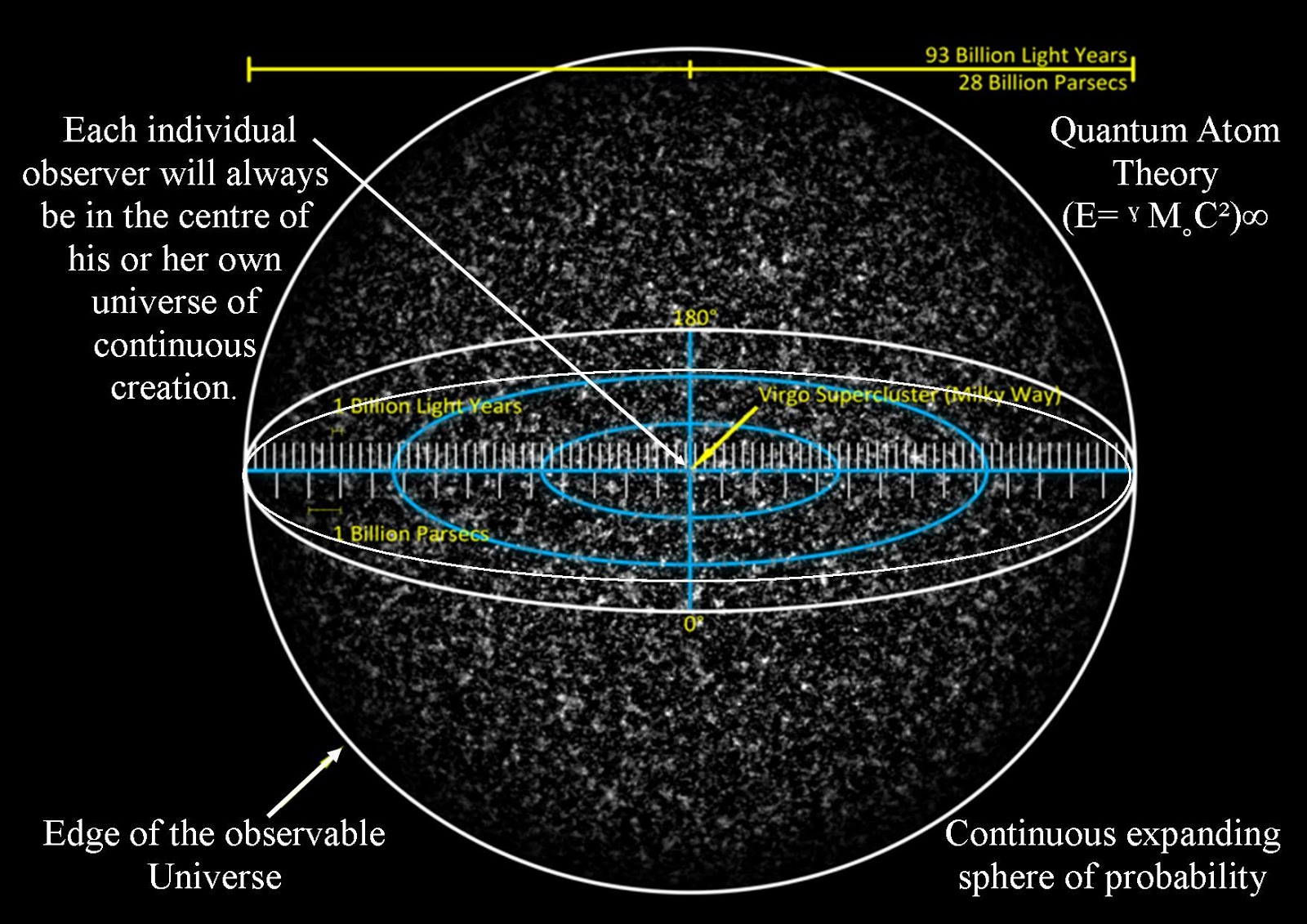
The term “observable universe” is used a lot throughout the video and I immediately had to wonder, how much of it can we actually see? I think we all know it’s beyond huge, so how much can our super telescopes actually see? No matter how strong my new eyeglasses are, I still can’t see the British Isles when I stand at the shore of the Atlantic Ocean on the East Coast of the U.S.
So I did some digging and discovered that in 2013 the European Space Agency released a thorough and accurate map of the “universe’s oldest light.” They had launched a space mission called Planck to measure the cosmic microwave background light as it traveled back towards us from the far edges of the universe. I won’t bore you with the math (you can read more in the Space article listed in my references below) – suffice to say they were able to calculate that our universe is/was 13.8 billion years old, based on the microwave light traveling back from the edge of the universe.
But there’s a hitch. That was the measurement as of 2013. Since the measurement was taken, the universe has continued to expand so the scientists further calculated that as of now, the diameter of the observable universe must be closer to 92 billion light years, or 92 billion years old.

The point is, when we speak of an observable universe, we’re working with an outdated number because the universe is constantly expanding. Further, we still can’t see what the heck is lying way out there that may yet be too primitive to be sending any observable signals that we’d recognize as alien in origin. Even if they are an advanced civilization, how could we see any signs of them that far away? They might not think to send us signals, or might not want to.
I’m also not 100% sure we can see anything in between our location and anywhere outside our solar system clearly. They get beautiful photos of the large items like nebulas, solar systems, and all sorts. But nothing close-up on any planets – at least not so far.
Seriously, we can’t even get a decent photo of Bigfoot, the reigning hide & seek champion of the world, remember? So how clear a photo would we get of a vastly distant culture that probably wouldn’t look anything like ours or meet our expectations of what an alien culture is?
 We May as Well Be Dead
The video continued briefly touching on mankind’s search for aliens then added, if we do find them, we may as well be dead. They believe that we’d be on the path of self-destruction because of something called “The Great Filter.”
I’ll explain The Great Filter in a moment because first we have to review the Fermi Paradox to set the filter in the right context.
According to Wiki, physicist Enrico Fermi posited that there is a paradox (or at least great inconsistency) between the total lack of evidence for extraterrestrial civilizations and the high probability estimates we have for finding them.
At the very least it looks like there are no extraterrestrial civilizations, as far as science can tell. At the most, it believes that if they are there, they certainly haven’t visited Earth.
So that begs the question, why aren’t we seeing any evidence of extraterrestrial civilizations?

The Great Filter
Enter The Great Filter. This theory, first written about by economist Robin Hanson, suggests a hierarchy of disasters that could befall an up and coming civilization. At any of these points, it could be crushed and rendered non-existent. Here is that list:
- Requires a habitable star system and host planet.
- Organic compounds would have to assemble in just the right way so as to be able to reproduce themselves.
- Successfully form simple single-cell lifeforms
- Successfully form more complex single-cell lifeforms
- Achieve sexual reproduction
- Successfully develop multi-cell lifeforms
- Go on to develop large brained animals that use tools
- Where we are now
- Achieve a colonization explosion.
This theory concludes that other civilizations, if they did exist, haven’t made it beyond the step we’re at now, step 8. So that begs the question, will we make it to the colonization explosion.
What can happen between steps 8 and 9? They cite things like nuclear war, climate change, artificial intelligence turning on their creators, maybe overpopulation, or perhaps some kind of super bug that kills us all before we find a cure.
My friends, this theory is so full of assumptions regarding what life on other planets may be like, that it’s almost laughable. And frankly, I’m appalled that any scientists could agree with it.
 Queue the Carbon-based Lifeform
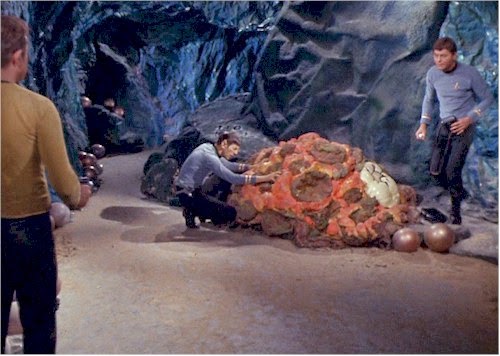
I always point back to the rock that became known as the carbon-based lifeform (the Horta) in the very first Star Trek series. Even then, we can’t be sure if it was a single cell or multi-cell lifeform, if it used tools or not, but it had some kind of brain with which it could mind-meld with Spock.
I’ve written other articles here on CryptoVille about what other lifeforms may be like. They may be so different from us (and our assumptions) that we don’t recognize them. Forget cells – they may have another way to hold their DNA- equivalent strands in place.
They could find a fiery planet the best place in the universe to live upon. Or perhaps they love a planet engulfed in poisonous (to us) gas. Maybe they don’t live on a planet at all – maybe they ARE dark matter.
To put limitations on a universe that continues to astound us, is ludicrous.
In addition, assuming that we probably aren’t going to get to step 9, colonizing the universe, reflects a total lack of understanding about the human spirit.

Time will Tell
History shows us that we come from hoards of explorers and curiosity seekers. It’s part and parcel of being human, so I’m very optimistic that some day the future generations of humans will be winging their way through time and space exploring and learning as they go.
This also gets me thinking. As these generations settle on new planets will they eventually evolve into specialized humans, with traits that help them survive their new climates and geography, much like the Nepalese have adapted to the low oxygen levels in their Himalayan villages?
It would be fascinating to see!
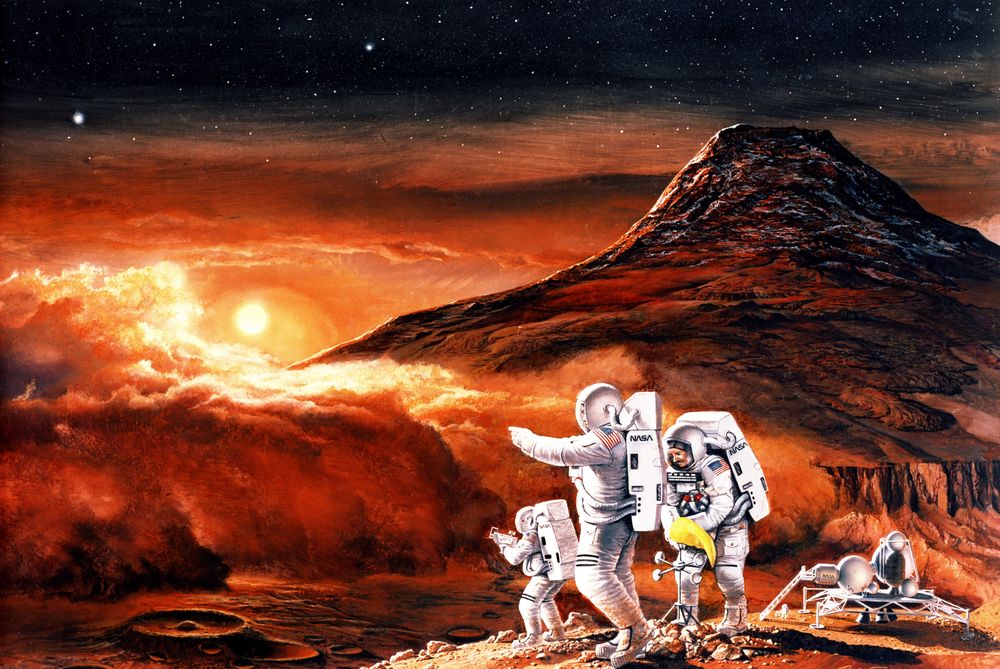
So, what do you think about all this? Do you think scientists will finally be convinced of the existence of sentient extraterrestrial life? Do you think mankind will successfully soar into the universe ready to explore and settle distant alien lands?
Let me know below, or over on our Facebook page called CryptoVille.
In the meantime, have a very Happy and SAFE Halloween!

References
https://www.space.com/24073-how-big-is-the-universe.html
https://en.wikipedia.org/wiki/Great_Filter
https://en.wikipedia.org/wiki/Fermi_paradox