
 In order to understand how difficult it is to determine a new species of animal, we’re going to first discuss how hard it is to distinguish between bobcats and lynx. Then we’ll apply that struggle to try and figure out if Bigfoot is an ape, a hominid, or something else.
Biologists at the University of British Columbia (UBC), Okanagan, asked the public for photos of bobcats and lynx they took in the wild. They wanted to study the populations of both animals in the wild around British Columbia. According to master’s student TJ Gooliaff, “Camera trapping and solicitation of wildlife pictures though citizen science have become common tools in ecological research.”
Gooliaff adds, “Even low misclassification rates can result in erroneous estimation of the geographic range or habitat use of a species – including underestimation of the occupancy, habitat preferences, or distribution of a species. This potentially hinders conservation and management efforts.”
Together with Biologist Professor Karen Hodges, Gooliaff received 4399 images of bobcats and lynx from people across British Columbia. The team then asked 27 bobcat and lynx experts to look at a subset of the photos and determine which species is shown in each photo. Here’s what they found:
- Many images came back from the experts labelled “unknown.”
- Experts didn’t agree with each other on which animal was in each photo.
- When shown the same photos several months later, experts wound up contradicting themselves as to which animal was in the same photo.
- Background habitat, light levels, the parts of the animal shown in the photos (some just showed a paw, a tail, the head, etc.) – further complicated the identifications among the experts.
What makes these results worse? All the photos they used were high quality photographic images.


Why Is This Important
We all know that bobcats and lynx exist. And yet, they are incredibly hard to distinguish between visually. The scientific community is acknowledging that in their study.
Now, let’s think about Bigfoot. Arguments abound on the internet whether he is an ape, an early hominid, a more advanced hominid, or something else. Goodness knows we have few to no “high quality photographic” images, except for the Patterson-Gimlin film which I believe to be the real deal. So our chances of proving anything with just a photo isn’t too good.
Complicating Bigfoot matters, it sounds like there may be different species roaming around the U.S. Many people have noted the different appearance of the Southern Bigfoot around Alabama, Louisiana, and parts of Texas compared to the Skunk Ape down in Florida. They all differ from the appearance of the Bigfoot in the Pacific Northwest. The Michigan, Wisconsin, and Ohio areas also seem to have their own variety of Bigfoot, and who the heck knows what’s happening in West Virginia – a hotbed of weirdness if there ever was one!

Being Open
We certainly have a conundrum on our hands when trying to figure out what Bigfoot really is. I think the important thing is to keep our minds open, review any and all research that comes out in this regard, and try to put the pieces of the puzzle together.
Personally, I think it’s more animal than human. I say that because it’s covered in hair, eats raw food, and has some disgusting personal habits (I refer here to my article on a Swedish Bigfoot sighting where the man saw the creature defecate, then wipe its bottom with its hand, then lick its fingers – gross!). Their “structures” are minimal at best, and their purported “nests” are very much like other animals in the wild build.
That said, I have no way of knowing for sure more than anyone else. So what can we do about this?
According to Professor Hodges, we shouldn’t rely on photos of similar animals to determine their classification. It still comes down to gathering physical and/or genetic evidence so we can definitively say what kind of animal was present at the time.
Interestingly, the scientists sited other animals whose classifications are hard to determine just by photograph alone: bears, deer, lemurs, wild cats, and antelopes. The problem gets worse when you factor in photos that are out of focus, the lighting is bad, or those that show only bits or pieces of the animal (like you’d find in trail cam photos).
Big Caveat
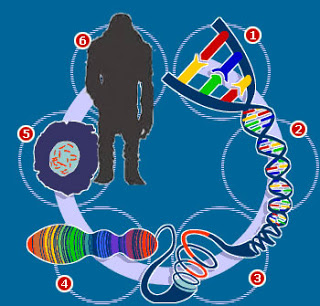
There’s just one glaring caveat in my mind when considering analyzing Bigfoot DNA. What if the results come back very closely related to ours? Would science recognize that as another hominid, another human form even closer to us? Or write it off as contamination from the human who found the sample?
Let’s remember that in the homo-sapiens DNA genome, we have 23 pairs of chromosomes. Chimpanzees, gorillas, and orangutans have 24 pairs of chromosomes. The difference between human and chimpanzee genomes is only about 1.2% (same for bonobos). Yet look at the difference between us and those animals.
So how much more closely related would Bigfoots have to be towards our genome?
It seems with Bigfoot we’re going to have to have a more collaborative collection of evidence. Something with DNA, yes, but also something that puts the animal clearly in the location where the DNA was gathered. I think of the hunters that say it’s going to take a body to prove these creatures exist and it does seem to be the most conclusive way to get the evidence needed, however unfortunate.
There’s no easy answer. But I feel a little vindicated that if science has trouble distinguishing between a bobcat and a lynx in photographs, then it makes more sense that they’re having trouble believing any photographic evidence of Bigfoot’s existence.
So, when is a Bigfoot not a Bigfoot? When we still don’t have the scientific evidence of their existence.
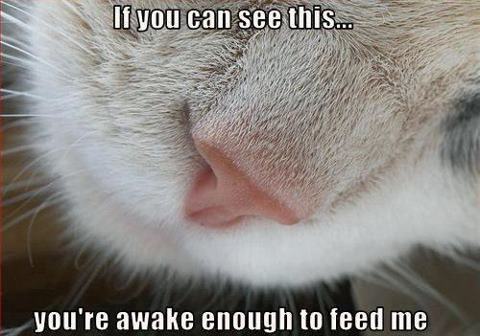
By the way, can you guess which type of feline this is? 😉
What do you think about the search for Bigfoot evidence?
References:
https://www.sciencedaily.com/releases/2019/01/190123105757.htm
http://bigfootzoologist.blogspot.com/2013/02/what-is-science-and-is-it-important-to.html